






At our dermatovenerology clinic, we specialize in the diagnosis, monitoring and removal of pigmented nevi (birthmarks), skin tumors a other skin growths.
Regular dermatological check-ups are key for early detection of potentially risky lesions, as is malignant melanoma, but also others benign or precancerous formations.
Dermatoscopic examination
To examine birthmarks, we use:
- digital dermatoscopic system – allows for capturing, archiving and comparing changes over time
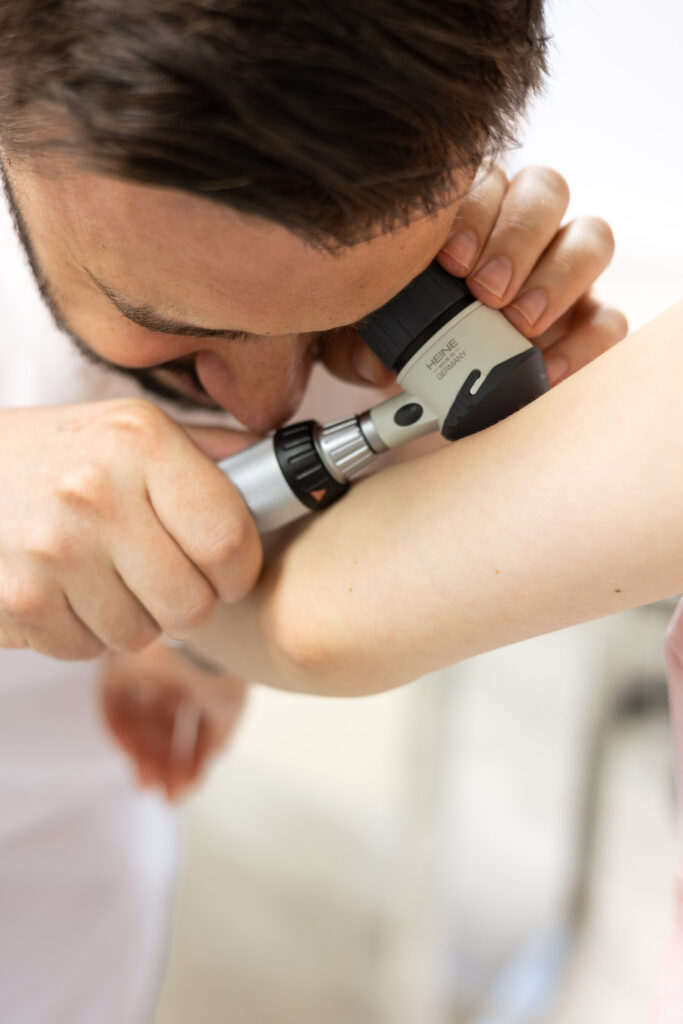
- hand-held dermatoscope – for direct examination with immediate assessment of structure and risk
These methods significantly increase the accuracy of diagnosis and allow the doctor to detect changes invisible to the naked eye.

When is a mole examination necessary?
We recommend a professional examination especially in the following cases:
- a sudden change in the shape, size, or color of a mole
- itching, bleeding, scaling or other unnatural manifestations
- the appearance of a new formation after the age of 30
- a family history of melanoma
ABCD rule for evaluating signs:
- A – Asymmetry: irregular shape
- B – Border: unclear, torn edges
- C – Color: multiple colors or significant darkening
- D – Diameter: over 6 mm or rapid growth

The most common benign skin lesions:
- Pigmented nevi (e.g. intradermal, junctional, blue nevi)
- Fibroids, hemangiomas, lipomas, cysts
- Seborrheic and actinic keratoses
- Papillomas, keratomas, chondromas
- Epidermoid cysts, atheromas, histiocytomas
- Pyogenic granulomas and others
Skin growth removal options:
Depending on the type and location of the unit, we offer:
- Surgical removal with histological examination (if a malignant finding is suspected or if located in high-risk areas)
- Electrocoagulation – removal of smaller benign growths
- Laser therapy – for appropriately indicated lesions
- Cryotherapy – freezing and removal of superficial lesions
Prevention and monitoring
Skin cancer, including malignant melanoma, is one of the most common and aggressive cancers with an increasing incidence. Regular examinations by a dermatologist, especially in patients at risk (light skin type, frequent sun exposure, genetic predisposition), are the most effective prevention.
With any sign changes don't postpone the examination – early intervention can be crucial.